Visualizzazione post con etichetta VLF Group. Mostra tutti i post

martedì 31 maggio 2016

VLF che passione ! - Sistema di riconoscimento e cattura automatica di "Chorus" e "Hiss"

Segnalato sul gruppo VLF su Yahoo :


http://onlinelibrary.wiley.com/doi/10.1029/2010JA016193/full#

sabato 4 luglio 2015

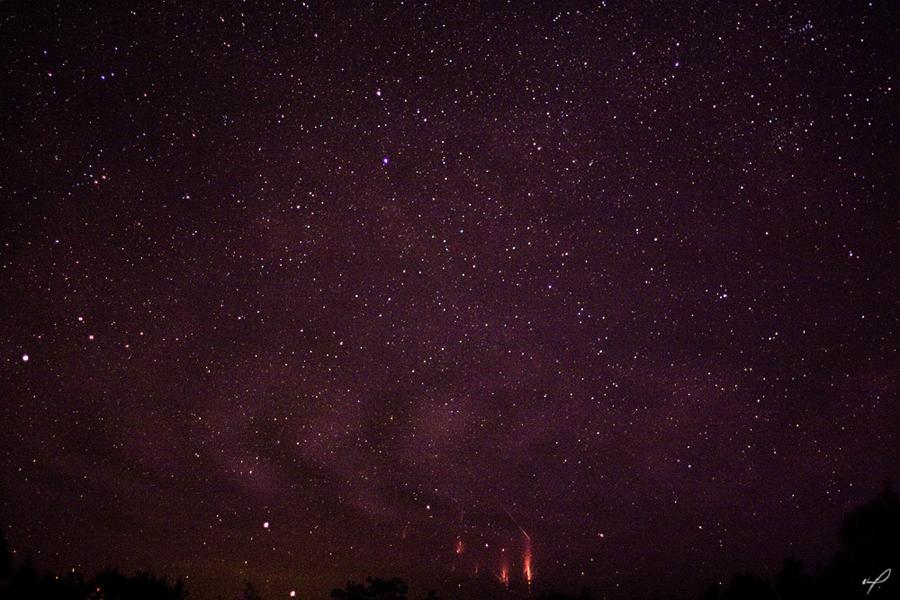
Eco radio VHF di uno Sprite

Rilevato dall' esperto Thomas Ashcraft al collegamento :

https://vimeo.com/132542129


martedì 24 marzo 2015

Interessantissimo documento sulla propagazione VLF e sui SID ( Sudden Ionospheric Disturbances )

Segnalato da Claudio Pozzi sul gruppo VLF di Yahoo , interessantissimo documento sia pratico che teorico sulla propagazione VLF e sui SID ( Sudden Ionospheric Disturbances )

http://arxiv.org/ftp/arxiv/papers/1503/1503.05789.pdf


martedì 16 dicembre 2014

Nuovo record mondiale di collegamento VLF Amatoriale a 9 Khz

New world record for vlf6

Mon Dec 15, 2014 9:57 pm (PST) . Posted by:

"Paul"


Hardly natural radio, but a good test of a VLF receiver.Wolf's vlf6 has been picking up an amateur transmission
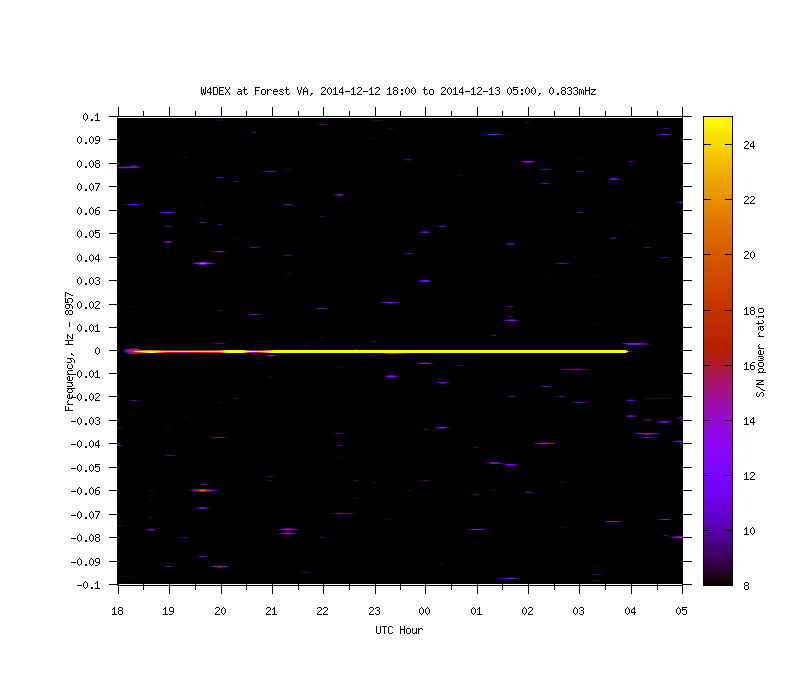
by W4DEX at around 9kHz from 35.27N,80.37E which is a new distance record for amateur VLF signals: 6918 km.

Thanks to the streamed signal and the recording 'loop' onthe stream server, it is quite easy to analyse the timestamped signal to tease out these ultra weak signals.

The signal strength at Bielefeld is equivalent to about4 extra electrons on the E-field probe.

It is interesting that the vorbis compression used by the uplink to the server does not noticeably degrade the S/N ratio of weak signals buried in the noise.

W4DEX is only about 250km from Mike Smith's receiver at Forest VA, which picks up the signal very well indeed.

Spectrogram from vlf35 from a recent transmission

http://abelian.org/vlf/tmp/141213b.png


For comparison this is how an amateur VLF receiver picks up
W4DEX at a range of 210km,

http://www.lwca.org/mb/msg/4911.htm

which shows well how good Mike's natural radio receiver is.

I think at the moment, Kevin's receiver at Hawley holds the
USA distance record for over-land reception.

Paul Nicholson

martedì 11 novembre 2014

mercoledì 29 gennaio 2014

European Activity in the Dream Bands ( 6-9 kHz)

From the Yahoo VLF Group :

Amateur activity by DJ8WX

Tue Jan 28, 2014 2:43 pm (PST) . Posted by:

"Paul"


For several nights DJ8WX (Munsterdorf 53.8958N,9.54167E)
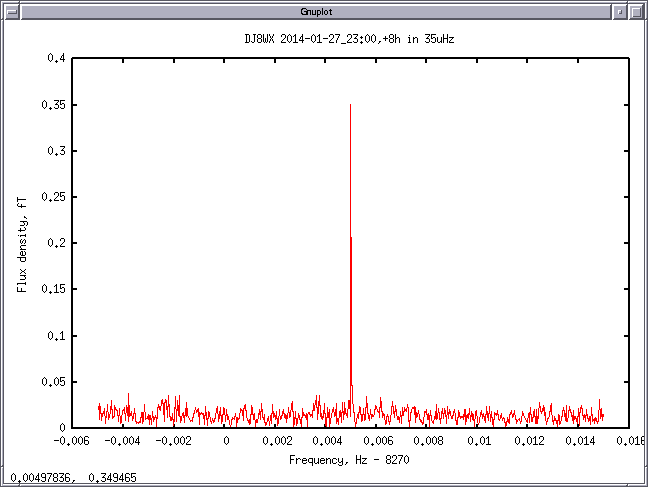
has been transmitting carrier at 8270.004 or 8270.005 Hz,
several hours each night with good phase stability.

http://abelian.org/vlf/fbins.shtml#p=1390942800&b=080&s=sp

Signal is nearly 30dB above noise in 35uHz bandwidth here in
Todmorden (range 762 km).

http://abelian.org/vlf/tmp/dj8wx.140127a.gif

This is a good target for your receivers. It might be
detectable in North America (East coast, or not too far inland)
given first rate reception. LWPC predicts optimum period for
integration (phase stable) is 23:00 to 07:00 UT.

Definitely a GPS timed receiver will be needed to dig this
signal out of the noise. Quite a challenge, an opportunity
not to be missed.

Paul Nicholson


domenica 17 febbraio 2013

Segnali VLF emessi dal bolide che ha colpito la Russia ?

Questa la relazione di Paul Nicholson sul gruppo VLF di Yahoo .
Uno dei tre osservatori impiegati per la triangolazione e' stato quello di Cumiana di Renato Romero .

Oggetto: Re: [VLF_Group] Re: Meteor Blazes Across Sky over Russia
Data: Sat, 16 Feb 2013 21:56:29 +0000
Mittente: Paul <paul@abelian.netcom.co.uk>
Rispondi-a: VLF_Group@yahoogroups.com
A: VLF_Group@yahoogroups.com


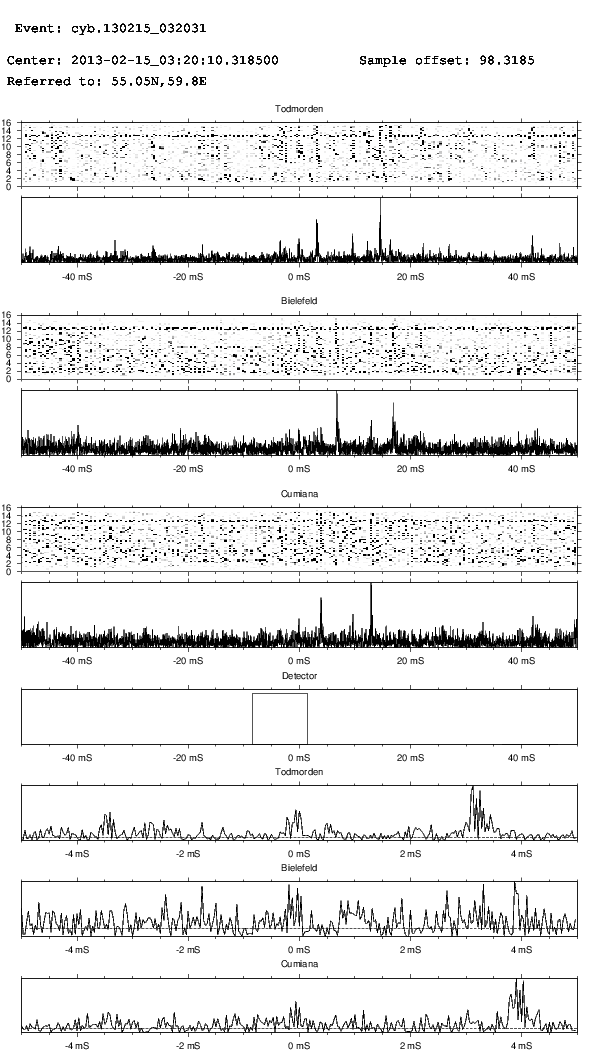
We had good recordings from the European receivers and the
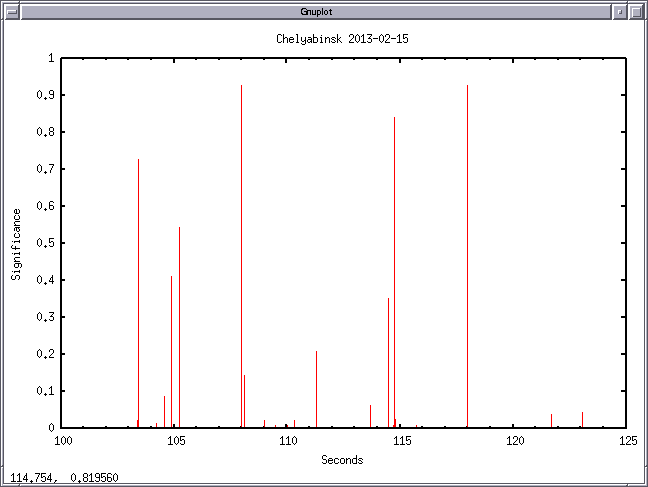
analyser picked out 15 possible signals in the 25 seconds
leading up to the final flare.

Output of the analyser :

http://abelian.org/vlf/tmp/130215a.gif


Time axis is aligned so that 120 seconds is 03:20:31 which is
roughly the time of the final flare.

Each spike indicates a possible signal. The spikes at 108 and
118 seconds are weak calibration pulses, waveform and timing
simulated for a source at 55.05N,59.8E

I've looked carefully at all these hits and none are genuine,
they are a typical collection of chance alignments of sferics.

Approximate ranges of the receivers are

Todmorden: 3900km
Bielefeld: 3300km
Cumiana: 3800km

As an example, here is one of the false hits, occurring 21
seconds before the final flare and some 5 to 7 seconds before
the meteor became visible on cameras,

http://abelian.org/vlf/tmp/130215b.gif


The analyser has picked out the scruffy little pulse which
arrives at the center of this plot. It is barely above noise.
In these charts, the three signals are time shifted so that
a signal originating at 55.05N,59.8E will be aligned on the
time axis.

I'll keep the signals filed with all the other fireballs and
when the calculated track of the meteor is published I can
try again with the better coordinates. The software is being
improved so there's always a chance that later this or one of
the other 250 filed events will turn something up.

Paul Nicholson


venerdì 28 dicembre 2012

Nulla sfugge agli appassionati ... Trasmissione a 26.0 kHz da Israele

Guardate un po' cosa sono risuciti a fare gli appassionati del VLF Group .
Captata una nuova emissione a 26.0 kHz con alcune stazioni automatiche gestite da altri appassionati , dotate di campione temporale GPS , hanno triangolato , cercato con Gooogle maps e trovato la installazione :
https://maps.google.com/maps?q=30.972274,35.097198&hl=en&ll=30.97174,35.098078&spn=0.010119,0.01929&num=1&t=k&z=16


Si possono notare due tralicci , i sistemi di radiali ed in particolare un dirigibile che potrebbe avere portato in quota un cavo per avere un' antenna efficiente a tale frequenza .

Di seguito il diagramma temporale dell' attivita' della stazione da parte dell' Osservatorio di Kiel , gestito dall'appassionato che ha effettuato la ricerca: Peter DF3LP .
E la sintesi delle triangolazioni di Paul Nicholson .